








First Lesson: Seatbelt to Ignition
You settle into the passenger seat, the engine is off, your sister is gripping the wheel, and nothing happens until you say something. That is how every session of Teach My Little Sister How To Drive begins. There is no button that starts the car and no menu that puts the seatbelt on for you: the first lesson is getting a nervous new driver ready to move, and it often takes far longer than anyone expects. One hands-on report from Tokyo Game Show described spending around ten minutes just on the seatbelt and the ignition.
- You never touch the pedals or the wheel – your voice is the only control
- Your sister handles the seatbelt, engine, gas, brake and steering herself
- The mouse only moves your view around the car
- The first goal is simple: belt on, engine running, car rolling slowly
What You Control and What She Controls
The split of responsibilities is the most important thing to understand before the first lesson. You are stuck in the passenger seat. You can look around with the mouse, check mirrors and watch the road, but every physical action in the car belongs to her: buckling up, starting the engine, pressing the accelerator, braking and turning the wheel. Your only tool is a microphone.
That means your job is closer to a driving instructor than a driver. You read the situation, decide what needs to happen next and put it into words. She hears you, answers out loud and then does something – ideally what you asked, sometimes something close to it, and occasionally something completely different.
New players often try to speak the way they would play a normal driving game, firing off steering directions every second. That rarely works. She needs time to hear, think and react, so the rhythm of the game is slower and more conversational than its title suggests.
Getting the Seatbelt On
The seatbelt is where most people discover what kind of passenger seat they are sitting in. Asking her to buckle up does not guarantee she will. She can agree cheerfully, chat about something else and simply never do it – a habit players notice again and again.
The fix is to treat the seatbelt as a single, separate task. Ask for it on its own, wait for her to answer, and watch whether she actually does it before moving on. If she only replies with words, ask again with a plain, direct sentence rather than adding more detail.
Tip: Confirm each step before giving the next one. “Put your seatbelt on” followed by “Is it on now?” works better than a long sentence that also mentions the engine, the mirrors and the road ahead.
It helps to remember that she answers confidently even when she has not understood. A cheerful “Done!” is not proof. Look, then continue.
Starting the Engine
Once the belt is on, the next job is ignition. The same approach applies: one instruction, one action. Combining “start the car and drive forward” into one breath is a common way to get an unexpected burst of speed before you are ready for it.
Short instructions have a known side effect: she sometimes adds actions you did not ask for. A very brief “go” can turn into more throttle than you wanted. Very detailed instructions have the opposite problem and tend to go over her head. The sweet spot for the first lesson is a short, complete sentence describing one thing.
- Ask for the seatbelt Use one plain sentence and wait for her reply.
- Check it Look and ask again if she only answered in words.
- Ask her to start the engine Nothing else in the same sentence.
- Ask for a slow start “Move forward slowly” is safer than “go”.
- Be ready to say stop Keep “stop” or “brake” on the tip of your tongue.
The First Few Meters
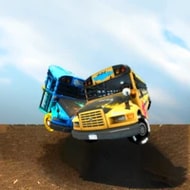
Rolling forward is the moment the game shows its teeth. A gentle request can still end in a sudden lurch, and even accelerating carefully has been known to send the car straight into another vehicle on an early course. Crashes are physical and dramatic, so the first few meters are worth taking slowly.
The most useful word in your vocabulary here is “stop.” Say it early, before the car is close to anything, rather than at the last second. A late command arrives after she has already committed to the movement, and you will be watching the result instead of preventing it.
When the car is moving at a crawl and she is responding to “slower” and “stop,” you are ready for the real lessons. The beginner courses build directly on this foundation, starting with cones and curves – see the S-Curve Course guide for what comes next.
Common First-Lesson Mistakes
- Giving several instructions in one sentence instead of one at a time
- Trusting a spoken “okay” without checking what she actually did
- Saying “go” instead of asking for a slow, controlled start
- Waiting too long to say “stop” when the car drifts toward something
- Raising your voice after the first mistake, which usually makes her sulk
The last point deserves its own attention. Her mood matters, and losing your temper early tends to make everything that follows harder. If the first lesson is already testing your patience, the guide on keeping your cool in the passenger seat covers how players keep conversations from turning into arguments.
Can I start the car myself?
No. Every action in the car – seatbelt, ignition, pedals and steering – is performed by your sister. You can only ask her to do it with your voice.
Why does she say yes and then do nothing?
She often answers confidently even when an instruction has not registered as an action. Repeat the request as a short, single task and check the result before giving the next one.
How long does the first lesson take?
It varies a lot with how clearly you speak and how she reacts. Getting through the seatbelt and ignition alone has taken some players around ten minutes, so do not worry if your first attempt is slow.
Every great drive in Teach My Little Sister How To Drive starts the same way: a buckled seatbelt you have actually checked, an engine she has actually started, and a slow first roll forward with “stop” ready on your lips. Once that is in place, head back to the main page to see what else the game throws at you.