














Cheap Car Repair








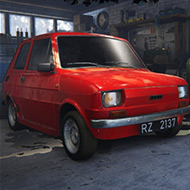
Imagine taking over a run-down garage where the customers have little money, the cars are older than some of the villagers and nobody checks your work until something falls off. Cheap Car Repair builds an entire mechanic game around that situation and then asks one uncomfortable question on every job: do you fix the car properly, or do you fix it just well enough to get paid?
| Where | A remote Polish village in the 1990s, with a deliberately rude nickname |
| Who you play | John the Mechanic |
| What you repair | Worn-out, rust-eaten local cars |
| Main dilemma | Genuine parts versus improvised substitutes |
| Price of mistakes | Customers who return furious when a repair gives out |
Honest Work or Creative Shortcuts
A job starts with a diagnosis. You look the car over, work out what is actually broken and plan the order of the repairs. Then comes the real choice: spend money on proper components, or reach for whatever is lying around the workshop.
The substitutes are where most of the jokes live. Household items take the place of real car parts – a dish sponge doing the work of an air filter, a pair of tights pulled over the pulleys in place of a belt, an odd round object bolted on where the steering wheel should be. The fuel tank is not safe from experiments either: watering down petrol saves cash, and the game will even let an engine run on beer or vodka.
None of this is free. Every improvised fix widens your margin on the current job and quietly raises the chance that the car fails on its way home. When that happens, the owner returns and wants far more than their money back, so the real skill is judging how much risk each customer can take.
The Hands-On Side of Cheap Car Repair
Beneath the comedy sits a surprisingly thorough repair simulation. Cars go up on the lift, wheels come off, rust gets scraped back, dents are filled and smoothed, panels are cleaned and resprayed. If the budget is tight, nothing stops you from spraying fresh paint right over the corrosion and hoping no one looks closely.
Parts are removed and refitted one at a time, and a forgotten fastener can undo an otherwise good repair. A few jobs under the car are built as short timed sequences, so you have to keep a steady hand while the clock runs.
- Diagnose the car and note what really needs attention
- Choose where genuine parts are worth it and where a shortcut will do
- Work through disassembly, repair and refitting without skipping a fixing
- Return the car and see whether it survives the trip out of the village
Two play styles tend to appear. Some players enjoy the mechanical process so much that they do clean, honest repairs even when a shortcut would pay better. Others turn the workshop into a speed business that moves cars out as quickly and cheaply as possible.
Life Around the Workshop
The garage sits in an explorable village rather than an empty menu. There are side jobs, small local pastimes and corners worth poking into, and the residents range from dodgy dealers to neighbors who seem to exist only to get on your nerves. Some of them open up new ways to earn, while others simply cause trouble.
How customers feel about your work feeds into your progress. An especially unhappy one may wreck the workshop, and putting the place back together eats into the money you saved by cutting corners in the first place.
Wandering pays off as well. Tucked-away spots hold old tools and abandoned components, and taking one of your own repaired cars out on the country roads is the quickest way to learn whether your handiwork is as solid as you hoped.
Strengths and Weak Spots
Players single out the loop of repairing and running the business as the best part. Mixing believable mechanical work with ridiculous improvisation gives it a personality that the more serious mechanic simulators do not have.
The story follows John through ordinary working days rather than big dramatic twists. The criticism heard most often is that it wraps up sooner than expected, which stands out next to how deep the repair systems are.
The humor is rough on purpose, and that will not be for everyone. If you like dark jokes and hands-on tinkering, though, the tone is a big part of the appeal.
Can you fit fake parts on purpose?
Yes, that is one of the central mechanics. Everyday objects can replace real components, but every substitution makes an angry return visit more likely.
What happens when a repair fails?
The customer comes back demanding much more than a refund, and in the worst cases damages the workshop, which you then have to restore.
Is it only about fixing cars?
No. You can explore the village, take on side jobs, search for old tools and spare parts, and follow John’s story between repairs.
Cheap Car Repair works best when you lean into its central temptation: weigh every shortcut against the customer in front of you, keep the rust hidden and the bolts tight, and see how long John’s reputation lasts on those bumpy village roads.
Comments
There are no reviews yet. Be the first one to write one.